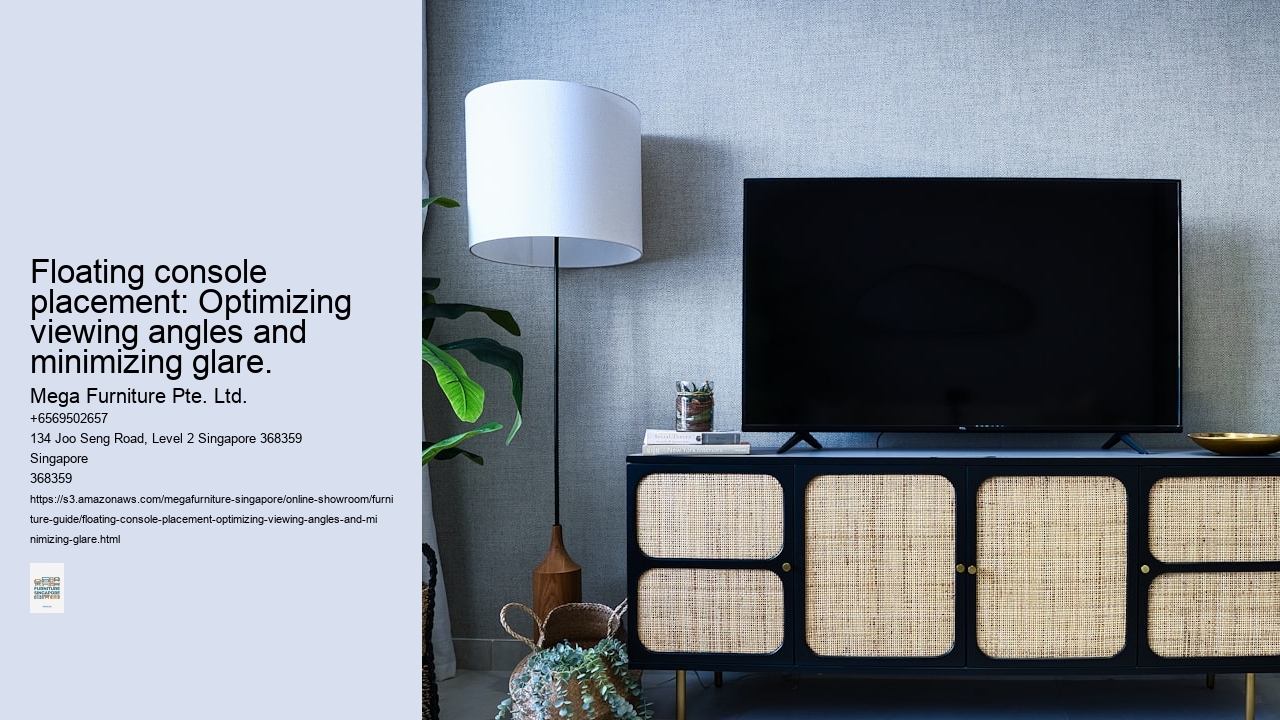
The standard 120cm console, once the default for flats built before 2015, now looks conspicuously undersized beneath a 65-inch screen—a mismatch that leaves cables dangling and forces the soundbar onto the floor. In many 3.5m-wide resale living rooms, this creates a visual imbalance; the TV dominates while the furniture beneath it seems to retreat. Proportion is the fix. A 55-inch TV typically needs a console around 140cm, while a 75-inch screen demands something closer to 200cm, with a 20–30cm overhang on each side providing both visual stability and practical space for speakers or plants.
Open-concept layouts in newer BTOs have effectively rewritten the rulebook. With living and dining areas flowing together in a single 6m span, a 180cm console acts as a crucial anchor—it’s the new 120cm. This length provides enough surface to organise media equipment and decorative items without appearing monolithic, bridging the gap between the TV zone and the dining set behind it. It’s a scale borrowed, somewhat logically, from bed sizing: a queen bed frame is roughly 180cm wide, a dimension that already feels familiar and appropriately substantial in a Singapore bedroom.
The old guideline of matching console length exactly to TV width often fails in practice, because it ignores the surrounding clutter. A 55-inch TV on a 140cm console leaves room for a router and a small basket; a 75-inch model on a 200cm one can accommodate a pair of tower speakers. That 20–30cm buffer on either side isn’t just aesthetic—it’s where the actual living happens, where you’ll place the remote controls that never stay in the drawer and the gaming headset that needs a home. In a typical 4-room BTO, this scaled approach turns the console into a functional centre rather than just a pedestal.
Material choices follow the size decision. A longer console in sintered stone or rubberwood needs a robust, straight leg profile to avoid sagging over time, while floating designs in MDF can feel less imposing even at 180cm. The key is to treat the console as the foundation of the entire media wall, its length dictating how you’ll organise everything else on that surface—and that’s where browsing the options for proportions becomes critical.
Singapore's humidity isn't a gentle suggestion; it's a persistent, 80% assault that solid wood planks absorb like a sponge. Over a few monsoon seasons, that beautiful teak or oak console can cup, bow, or develop visible gaps at the joints, especially if it's placed against a wall where air circulation is poor. Engineered wood, with its cross-layered plywood core, resists this expansion and contraction far more reliably—it's the pragmatic choice for a long-term installation. You're not sacrificing aesthetics, either; many engineered wood veneers offer convincing grain patterns that rival solid timber. The real test comes when you run a hand across the surface after a year; with the right material, it'll still feel flat and true.
Lacquered MDF or a high-pressure laminate top is practically non-negotiable for households with kids and pets. These finishes create a near-impervious barrier against spilled drinks, crayon marks, and the general chaos of daily life, wiping clean without a trace. A powder-coated metal frame, while less common, offers a different kind of toughness—it won't chip like wood and is immune to moisture entirely, making it a solid choice for a minimalist, industrial look. The key is a continuous, sealed surface; any visible raw edges on the MDF core are an invitation for humidity to swell the material from within. In a typical 4-room BTO living room, this resilience matters more than a delicate, natural finish.
Full-extension glides aren't just a luxury; they're the main signal that a console is built for the long haul. Cheap, partial-extension runners feel gritty after a few months of accessing game controllers and charging cables, and they'll sag under the weight of an AV receiver. Quality glides, often bearing a brand name like Blum or Hettich, operate with a silent, dampened motion and support substantial load—you can feel the engineering in the smooth pull. They allow you to see and reach the entire contents of a deep drawer, which transforms storage from a frustrating rummage into an organised system. It's a detail that buyers often overlook, but it defines daily usability.
Very few HDB or condo floors are perfectly level, and an unadjusted console will rock slightly—a maddening distraction in an otherwise serene media setup. Adjustable levelling feet, often concealed behind a toe-kick, let you stabilise the unit on any uneven surface, ensuring doors and drawers align properly. More importantly, they allow for a small but crucial air gap between the furniture and the floor, promoting ventilation that helps prevent mould or moisture buildup underneath. For a floating console, this adjustment is often integrated into the wall-mounting bracket, but the principle remains: stability against Singapore's settling concrete slabs is never guaranteed.
The back panel of a console, pressed against your living room wall, is its most vulnerable surface. Condensation and ambient moisture travel through porous plasterboard, and an unsealed particleboard back will slowly swell, warping the entire structure from behind. A quality unit will have a laminated or vinyl-wrapped rear panel, fully sealed on all edges, acting as a moisture barrier. This is a critical check-point; you should be able to run your fingers along the back's edge and feel a smooth, finished surface, not a rough, absorbent one. It's a hidden detail that separates furniture that lasts five years from pieces that last fifteen.
The perfect viewing angle is often ruined by a single, blazing afternoon sunbeam. In many HDB point blocks, that means a west-facing window turning your 75-inch screen into a mirror during the evening news. The solution isn't just blackout curtains—it's positioning. Centre your TV so its screen sits at a seated eye level of around 110 to 120 centimetres, which typically means the console beneath needs to be much lower than you'd think. A floating console mounted at this precise height pulls the whole arrangement away from that punishing glare, creating a pocket of controlled light in an otherwise bright room.
Getting the height right is only half the battle; the real test comes when you plug everything in. A PlayStation 5, a soundbar, a router, and their attendant power bricks create a notorious nest of cables that can unravel even the cleanest look. Strategic console placement is key here, using the wall itself to hide trunking from the nearest power point. Look for a design with integrated cable management—rear trays that corral the mess and grommeted holes that allow clean vertical runs up behind the mounted TV.
That's where thoughtful construction matters. A well-designed floating console doesn't just hang on the wall; it organises the chaos. Deep-set backs or full rear panels conceal power strips, while internal compartments separate the router's blinking lights from the game console's bulk. It turns a technical hurdle into a solved problem, letting you focus on the content, not the clutter.
For those piecing together a new media wall, the console's length becomes a critical calculation. A 180cm model might suit a 55-inch TV, but upgrade to 65 inches and you'll want at least 200cm to maintain visual proportion and prevent that top-heavy feel. It’s a balancing act between screen size, wall space, and that all-important cable real estate behind the scenes. The right choice doesn't just hold your gear—it engineers the entire viewing experience, from the first glance to the last episode.
The most expensive TV console mistake in a Singapore flat isn’t the price tag — it’s the door swing clearance. A buyer installs a sleek 180cm floating console in their BTO corridor, then discovers the master bedroom door can’t open past 45 degrees. That’s a daily inconvenience, but the real cost comes when you need to move a large item like a mattress or a cabinet out; you’ll have to dismantle the console first.
North-facing living rooms in many condos and older HDB blocks get limited direct sunlight, which makes a dark, monolithic TV console a particularly gloomy choice. A matte black or charcoal grey unit can turn a 4-room flat’s media wall into a shadowy slab, visually shrinking the space. Lighter finishes like oak or walnut veneer, or even a two-tone design with a lighter base, reflect what little ambient light there is and keep the area feeling centred.
Storage needs get underestimated, especially for the boxes we never throw away. A gaming console, its peripherals, and the router with its backup cables all occupy more cubic space than most floating console designs account for. The result is a pile of boxes stacked beside the unit, defeating the clean look you bought it for. Opt for a model with deeper drawers or at least one tall cabinet compartment; that’s where those bulky items will actually go.
Material choice is another quiet failure. Particle board with a laminated veneer might look solid in a showroom, but Singapore’s humidity can cause the veneer to bubble or peel within 18 months, especially if the unit is placed near a frequently opened balcony door. The false economy is clear: you save $400 upfront, but you’re shopping for a replacement in two years. Solid wood or engineered wood with a proper sealed finish handles the climate better, though it typically costs between $1,200 and $2,400 for a 200cm length.
Finally, there’s the temptation to maximise display space by choosing a console with only open shelving. That becomes a dust magnet in our urban environment, and it visually clutters the wall. A mix of concealed and open storage, where you can organise router boxes behind a door and display a favourite book or ornament on a shelf, maintains the intended minimalist aesthetic without the maintenance headache.
The difference between a catalogue image and the real thing is often in the drawer action—that quiet, weighted glide versus a clatter on its tracks. That’s the main reason to visit a showroom like Megafurniture’s Joo Seng outlet, bypassing the online gallery for a hands-on assessment of material heft, finish consistency, and hardware. You’ll find a floating console that looks substantial in a photo can feel surprisingly light when you lift its corner; a lacquer finish that appears seamless online might reveal subtle texture variations under the showroom lights. Tactile verification beats pixels every time, especially for grain matching across panels and the perceived stability a unit will offer once mounted on your wall. For BTO flats, where walls are often non-structural drywall or feature obstructive beams, this physical check is critical. Megafurniture’s range includes specific floating console models designed to address these spatial constraints, with shorter lengths or adaptable mounting systems. In person, you can judge if a 180cm model in American walnut has the visual weight to anchor a 65-inch TV without seeming to strain the wall, or if the grain pattern on its sintered stone top flows naturally from one slab to the next. It’s about confirming the built quality matches the design intent. The process is straightforward. Test every drawer and door, feeling for smooth movement and listening for solid closure. Press down on the top to gauge rigidity, and run a hand along the back edge to check for unfinished areas that might face the wall. Pay attention to the finish in different lighting—showrooms typically mix warm ceiling spots with cooler ambient light, mimicking the conditions in many homes. This scrutiny reveals details online images can’t convey, from the cool touch of a quartz composite surface to the precise alignment of mitred joints. Ultimately, you’re assessing whether a piece feels like a permanent installation or temporary furniture. A well-made floating console should give the impression it’s growing from the wall, not just stuck onto it. That confidence comes from seeing the mounting brackets, feeling the density of the engineered wood, and understanding how the piece will live in your space. You can start this evaluation by browsing the
floating console optionsonline, but the final decision deserves a Saturday trip to verify it in three dimensions.
The 2.4-metre-long packaging for a popular console length is about 20cm too long for a standard HDB lift diagonal. That’s the first reality check for many BTO flat owners — you’ll need to book the service lift, which often involves a fee and coordinating with the building management a week in advance. Delivery teams are used to this; professional mounting services typically include navigating the lift logistics and the final 20-metre haul down the corridor. Opting for DIY collection to save a few hundred dollars means you’re the one wrestling that flat-pack box up the stairwell in Eunos or Tampines.
Professional installation isn’t just about convenience. A floating console must be anchored securely to the concrete wall, not just the plaster skim — a misstep that leads to a catastrophic pull-down, especially under the weight of a 75-inch TV and media equipment. Installers will locate the structural points, use appropriate wall anchors, and spend a critical half-hour with a spirit level ensuring the entire 180cm span is perfectly straight. The DIY alternative often results in a subtle, maddening tilt that you’ll notice every time you watch television.
Warranties from major retailers typically cover you for three to five years, but the fine print matters. Structural integrity for the mounting system is usually covered fully. Surface issues, like laminate peeling at the edges or discolouration from sun exposure in a west-facing living room, might only be addressed for the first year. It’s a good practice to inspect the console thoroughly upon assembly, documenting any finish flaws immediately — that’s your strongest leverage for a replacement.
The most overlooked step is the post-installation check a week later. Go back and gently test the console’s stability, ensuring all wall anchors have settled and there’s no new creaking or sagging. This is also when you’ll notice if the levelling was truly accurate once the unit bears its full load. For a curated selection of wall-mounted options that factor in these delivery and installation realities, you can browse Megafurniture’s collection. Their professional mounting service handles the complexities, leaving you to worry about cable management instead of whether your new centrepiece is about to detach from the wall.
You’ve found the perfect floating console for your 4-room BTO living room, but now you’re staring at your feature wall — is that hollow plasterboard really going to hold it? That’s the right question to ask. In Singaporean homes, where false walls and plasterboard are standard, installation isn’t just about finding a stud; it’s about understanding what’s actually behind your paint.
Can I mount it on a false feature wall? Yes, but only with proper reinforcement. A floating console loaded with a 65-inch TV and media gear exerts significant pull-out force. Simply screwing into the plasterboard will fail. You’ll need to install a solid plywood backing board across the wall frame first, then anchor the console’s mounting bracket securely into that plywood. It’s a more involved job, but it’s the only safe method.
What about solid plaster walls in a landed property? They’re more forgiving, but you still can’t guess. Use a reliable stud finder to locate the timber battens behind the plaster; the console must be fixed directly into these. Hitting only plaster, even if it feels solid, risks a catastrophic pull-out over time, especially with the constant humidity. For peace of mind, consider hiring a handyman who’s familiar with the construction in older neighbourhoods like Katong or Bukit Timah.
How high should it be off the floor? Aim for 15 to 20 centimetres. This isn’t just an aesthetic preference — it’s practical. That clearance lets you run a robot vacuum or a mop underneath easily, preventing dust bunnies from becoming a permanent fixture. In a compact living room, that clean line of sight under the console also makes the space feel less cluttered.
What weight capacity do I need for a 65-inch setup? Verify the console’s rating covers at least 50 kilograms. A modern 65-inch TV might weigh around 25kg, but then you add a soundbar, game consoles, a set-top box, and perhaps some decorative items on top. The total quickly adds up. Always check the manufacturer’s specifications for the dynamic load rating, not just the static one; it needs to handle vibration and minor adjustments without sagging. For a curated selection of robust options, you can browse Megafurniture’s collection.
The most expensive mistake with a floating console isn't the console itself—it's discovering your plasterboard wall can't hold it, after you've already bought a 75-inch TV and booked the installer. That's why the first tick on your checklist should be a definitive wall type verification. In many HDB blocks, partition walls between the living room and a bedroom are non-structural; a floor-standing unit might be safer there, while a true concrete wall in a resale flat's living room can easily support a 240cm floating console with the right brackets.
You'll also need a complete inventory of every component that must live inside it. That means not just the media player and game console, but the Wi-Fi router, the soundbar's separate subwoofer, and any legacy devices like a DVD player that grandparents might still use. A console that prioritises cable management design—with dedicated rear channels, grommets, and accessible back panels—will save you from a tangled mess behind a unit you can't easily move; aesthetic alone won't hide the chaos when you need to swap a HDMI cable.
Given Singapore's humidity, materials matter beyond looks. Engineered wood with a melamine or laminate finish typically fares better than raw MDF in a non-air-conditioned living room, and sintered stone tops won't swell. Confirm your installer has specific competency for your housing type too; a contractor who mainly does condo feature walls might not be familiar with the precise drilling requirements for HDB concrete, which is a different beast from drywall.
Treat the console as a fixed anchor for a five to seven year furnishing cycle. Your TV might upgrade, your sound system might change, but the console should remain the constant centre of your media wall—so its proportions, finish, and storage logic need to accommodate that long-term evolution. It's the piece you won't replace every time you feel like a refresh.
In a typical 4-room BTO, where the living area might be just 85 sqm, the floor space reclaimed by a wall-mounted console isn't just a design choice-it's a functional necessity. That clean line beneath the TV eliminates a major obstacle for robot vacuums, which need at least a 10cm clearance to pass underneath without getting stuck. More than just storage, a floating unit creates a deliberate visual plinth, lifting your media setup off the floor to define the entertainment zone without crowding it.
The wall you're mounting to dictates everything. Singapore's concrete structural walls, common in condos and along corridor-facing sides of HDB flats, can handle significant load; they're the safe bet for a solid timber console packed with a soundbar and gaming consoles. A TV console anchors the wall opposite the sofa in the same way a tall bookshelf anchors a corner — long horizontal piece, mix of open and closed storage, defines the visual weight of one whole side of the room. Megafurniture's TV Console range covers floating wall-mounted designs, low-profile freestanding consoles, and modular feature-wall configurations. Most pieces sit at 40-50cm height, sized for screens up to 75 inches.. HDB's internal partition walls, however, are a different story-often lightweight and not designed for heavy point loads. Securing into the studs is mandatory here, and you'll want to distribute weight with a robust mounting rail system, not just a few plugs.
Choosing the right length is about proportion, not just TV size. A 180cm console for a 65-inch TV creates a balanced, anchored look, while a unit shorter than the screen can make the whole arrangement feel precarious and top-heavy. The effect is most pronounced on a painted feature wall or one clad in sintered stone; the floating console acts as a horizontal anchor, grounding the vertical expanse and creating a layered, architectural feel that a floor-standing unit simply can't achieve.
It's a detail that separates a considered media wall from a piece of furniture shoved against a wall. That intentional gap underneath, often illuminated with a discreet LED strip, turns the console itself into a design object-light and shadow become part of the composition. For a curated selection of wall-mounted options in various finishes, you can browse Megafurniture's collection.
Ultimately, the success of a floating console hinges on that initial assessment of your wall type and a honest inventory of what you'll store. Overloading a partition wall is a common, costly mistake. Get it right, and you gain not just floor space but a cleaner, more deliberate focal point for the room.
In a typical 4-room BTO, where the living area might be just 85 sqm, the floor space reclaimed by a wall-mounted console isn't just a design choice—it's a functional necessity. That clean line beneath the TV eliminates a major obstacle for robot vacuums, which need at least a 10cm clearance to pass underneath without getting stuck. More than just storage, a floating unit creates a deliberate visual plinth, lifting your media setup off the floor to define the entertainment zone without crowding it.
The wall you're mounting to dictates everything. Singapore's concrete structural walls, common in condos and along corridor-facing sides of HDB flats, can handle significant load; they're the safe bet for a solid timber console packed with a soundbar and gaming consoles. HDB's internal partition walls, however, are a different story—often lightweight and not designed for heavy point loads. Securing into the studs is mandatory here, and you'll want to distribute weight with a robust mounting rail system, not just a few plugs.
Choosing the right length is about proportion, not just TV size. A 180cm console for a 65-inch TV creates a balanced, anchored look, while a unit shorter than the screen can make the whole arrangement feel precarious and top-heavy. The effect is most pronounced on a painted feature wall or one clad in sintered stone; the floating console acts as a horizontal anchor, grounding the vertical expanse and creating a layered, architectural feel that a floor-standing unit simply can't achieve.
It’s a detail that separates a considered media wall from a piece of furniture shoved against a wall. That intentional gap underneath, often illuminated with a discreet LED strip, turns the console itself into a design object—light and shadow become part of the composition. For a curated selection of wall-mounted options in various finishes, you can browse Megafurniture's collection.
Ultimately, the success of a floating console hinges on that initial assessment of your wall type and a honest inventory of what you'll store. Overloading a partition wall is a common, costly mistake. Get it right, and you gain not just floor space but a cleaner, more deliberate focal point for the room.